Content Intelligence
Analyze Content for Substance & Relevancy
Skills Alignment
Align Content with Targeted Skills
Search & Discovery
Find the Needles in the Haystack
Migration / Reuse
Transition Content to a New Platform
Content Intelligence
- Overview
- Ideal Audience
- Key Features
- Use Case
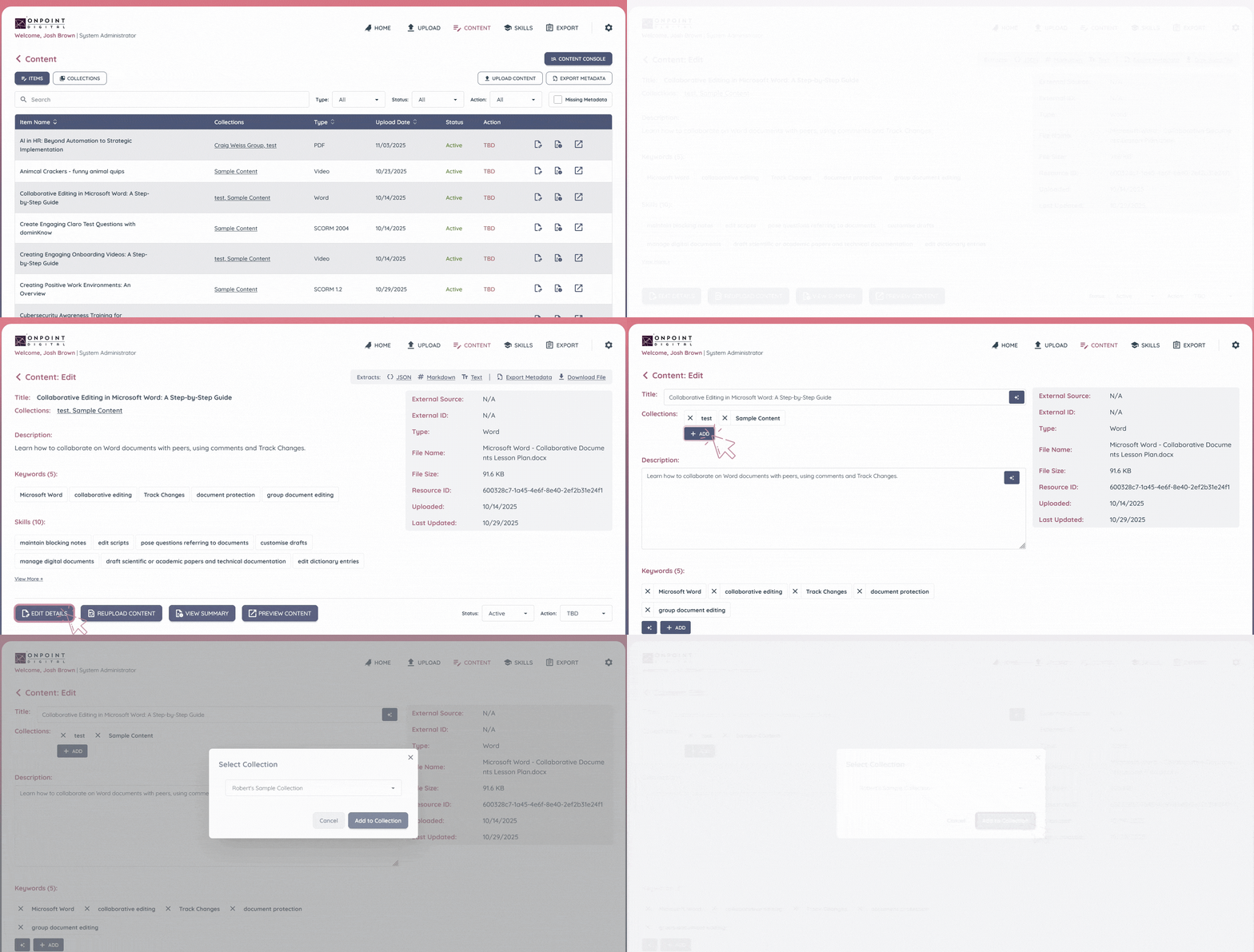
As the market’s first Content Intelligence Toolkit, MetaLark was designed from inception to provide a systematized, AI-enhanced way for organizations to streamline the process of gathering, cataloging and assessing the full range of cross-domain content across an enterprise. MetaLark makes is convenient to import an entire warehouse of digital items that are automatically parsed using AI-enhanced methods to document exactly what’s found in all of that content. The resulting “Content Encyclopedia” can be used for one-time analysis or on an ongoing basis to help monitor catalog completeness and readiness for future efforts. MetaLark helps fill-in the metadata associated with each cataloged content item, including inferred skills, then auto-generates editable summaries and exportable assessments with associated question libraries on demand.


Instructional Designers & Content Managers – Professionals who create, modify and manage their organization’s content library
System Training Managers – Professionals who work with learning platforms to match an organization’s learning objectives with both internally created and 3rd party content libraries
Learning Strategists – Individuals tasked with assessing and transforming existing content to make sure it aligns with future training programs and new initiatives like ”learning-in-the-flow” and AI-enhanced learning
L&D Leadership – Learning leaders responsible for the big picture who need to know the depth and value of their content and where/how it needs to evolve in order to determine associated costs, risks and benefits
Ingest – Use available APIs to upload learning content, regardless of file format
Organize – Categorize items into specific Collections for efficient analysis
Review – Launch individual items where necessary to help with context
Update – Edit auto-generated titles, descriptions, meta tags and content-specific summaries
Analyze – Run various reports to see what you have, enabling decisions that guide new content strategies
Export – Mark content items for keep, refresh, or retire before exporting
Analyze an entire library of learning content for substance and future relevancy. A content manager with thousands of digital resources, articles and study guides faces months of manual effort to understand what all is in their legacy content. Unfortunately, not all of their content has accurate or updated metadata making review and updates tedious especially given how outdated some of the content has grown. The learning team is able to leverage MetaLark’s content ingestion APIs to automate the capture of all legacy content assets and then use MetaLark’s Parsing Engine to analyze thousands of summaries stored in standard DOCX and RTF formats to AI-generate full metadata for more than 5,000 content items in less than a week’s time.
Skills Alignment
- Overview
- Ideal Audience
- Key Features
- Use Case
Before an organization embarks on any large-scale content development project, they are often beset by the need to understand and measure the current state and scale of their legacy content libraries. Assessing ”What do we have right now?” can be a critical factor before asking the question “What do we need for tomorrow?”
As a full-featured Content Intelligence Toolkit, MetaLark can assess all types of content L&D teams use every day to design and support their learning programs, helping produce valuable insights for decision making. MetaLark makes it easy and convenient to identify, upload and process diverse learning content items – from SCORM and xAPI packages to videos, podcasts, PDFs, web pages and more – whether those items are in your current LMS or stored in other enterprise repositories, shared drives or personal computers. Once processed, the system displays auto-generated metadata including titles, descriptions, and meta tags, along with editable summaries, assessment questions and inferred skills.
Content Analysts – Consultants tasked with assessing a client’s existing content library for completeness, readiness and skills alignment
Learning Strategists – Individuals responsible for directing the transformation of existing content to ensure it aligns with future training programs and new initiatives like “learning-in-the-flow” and AI-enhanced learning
L&D Leadership – Learning Leaders responsible for the big picture who need to know the depth and value of their content and how it needs to evolve in order to become a “skills driven” organization
Ingest – Capture content via batch upload or seamless streaming via available APIs.
Organize – Categorize content into admin-defined Collections for easier analysis.
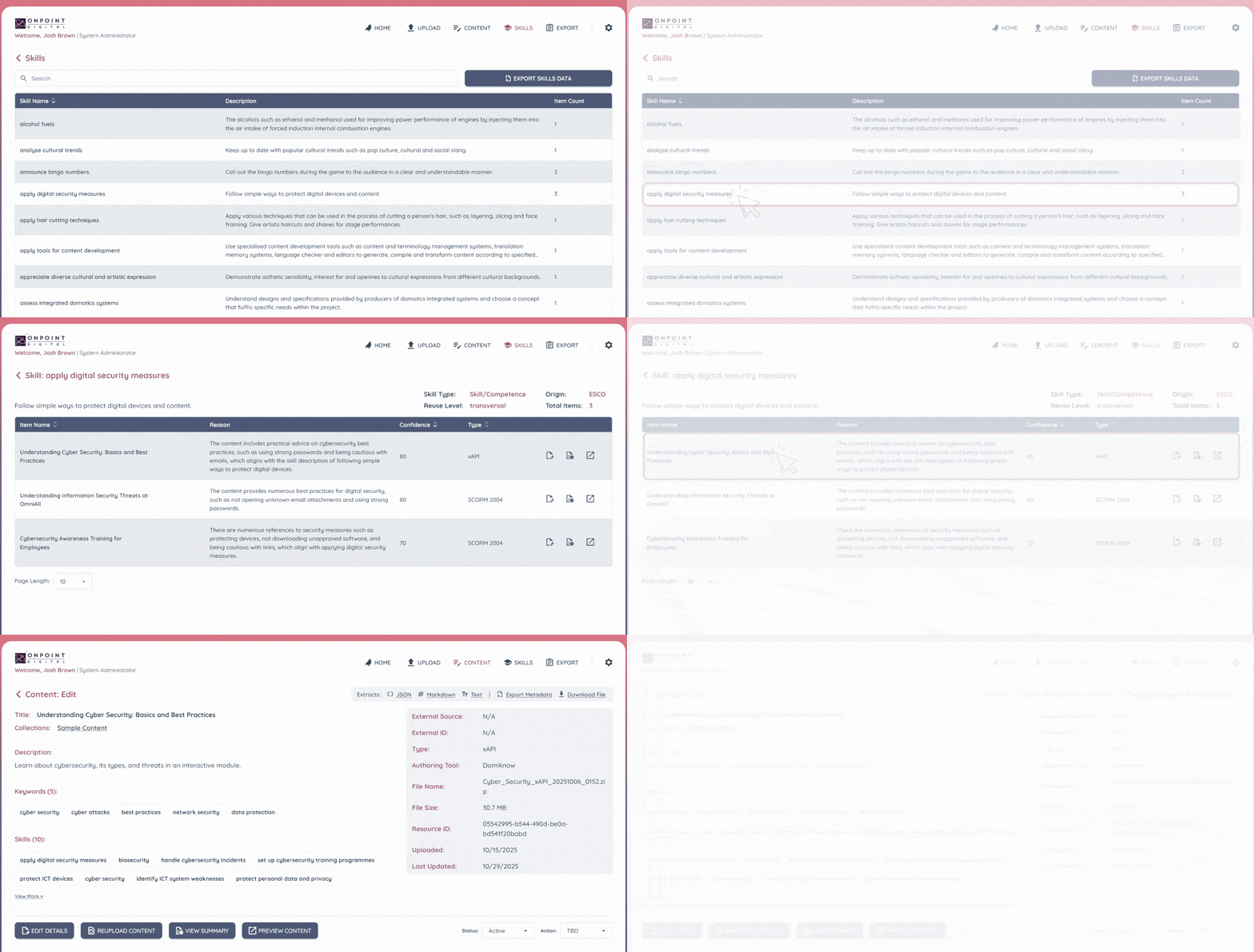
Update – Edit automatically generated metadata and vet content-specific skills.
Analyze – Review the entire collections’ skills inventory so that gaps can be identified.
Export – Export the newly generated metadata and accepted skills to your LMS for updating.
Align available content with targeted skills. Identify gaps. In their efforts to transform their culture from delivering training through structured curriculums into becoming a “skills-based organization”, a leading technology company needs to document how well their training content aligns with their selected skills taxonomies. Unfortunately, the content in their enterprise LMS has either incomplete or altogether missing metadata, making it difficult to identify how their content may align with their future skills targets. MetaLark’s Parsing Engine is able to analyze more than 7,500 content items over a long weekend, then automatically update missing metadata to help create an updated Skills Inventory that can be reviewed by their L&D leadership team to make decisions on measurable skills gaps they need to fill.
Search & Discovery
- Overview
- Ideal Audience
- Key Features
- Use Case
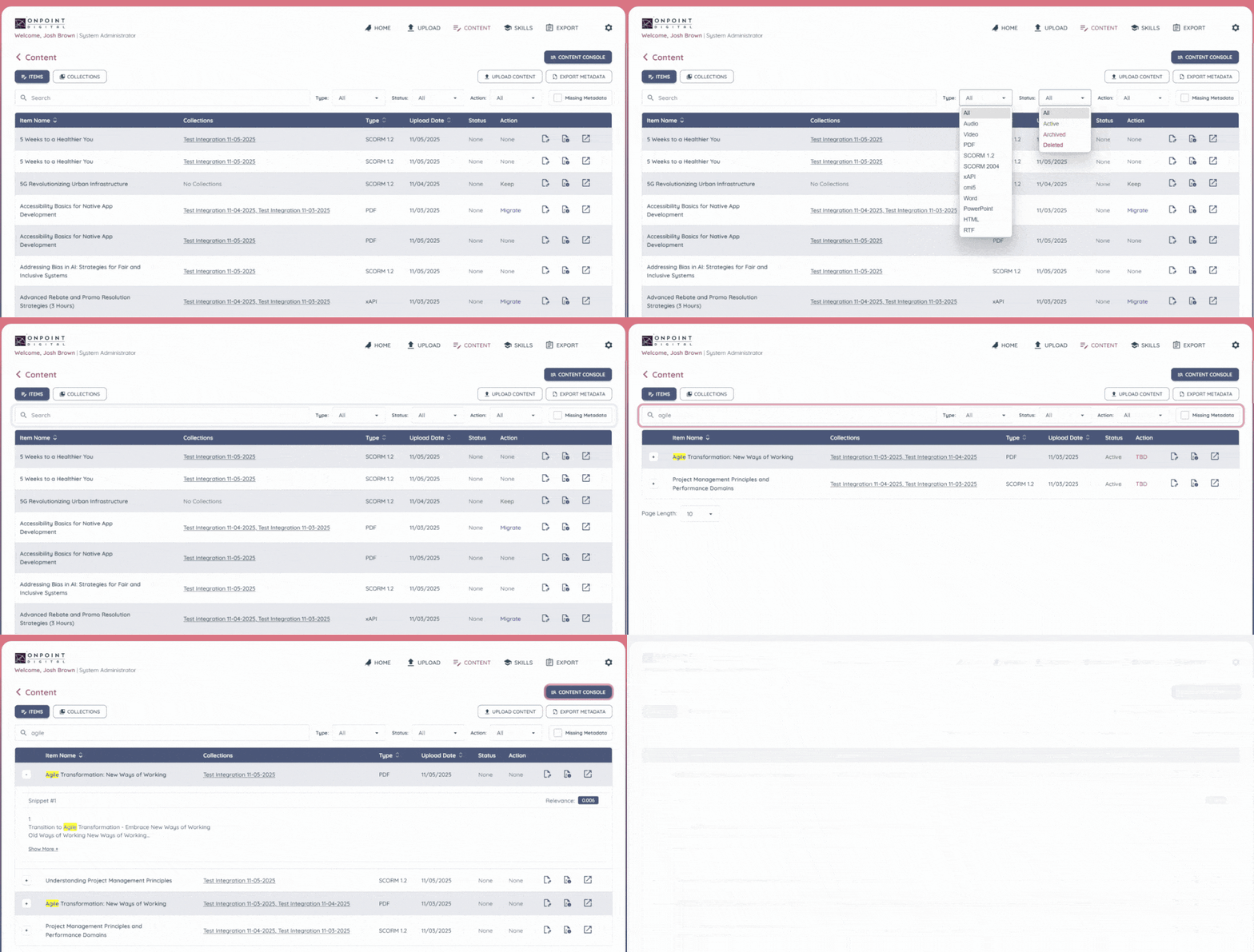
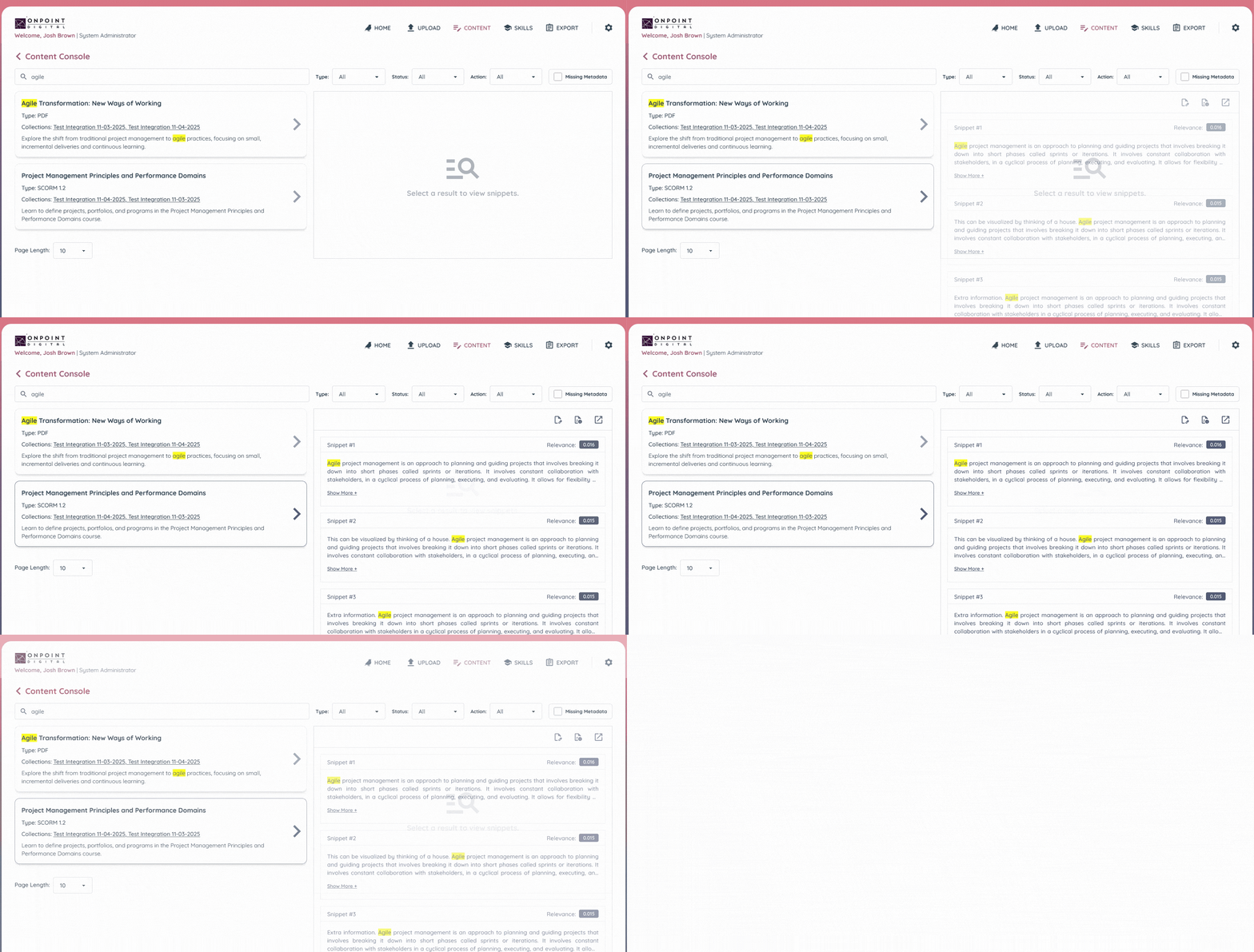
As a versatile and flexible Content Intelligence Toolkit, MetaLark serves as an essential framework that allows learning professionals to capture and make sense out of all of the digital assets, courseware and skills that comprise an enterprise’s corpus of content. MetaLark makes it easy to securely gather content from multiple sources, efficiently import it, and organize it all for quick review and disposition. Applying AI- and Machine Learning-based methods to scour the full range of content, MetaLark helps capture and catalog it at a molecular level so it can easily be searched and analyzed. Each content item is automatically scraped and parsed using AI-enhanced methods to document exactly what’s found in all of that content, using MetaLark’s vector database. Sophisticated search then finds every occurrence of a particular word or phrase to identify its location within each unique content item in order to assist you in the internal update of those materials.
Content Analysts – Learning professionals tasked with understanding and assessing a content library for completeness, readiness and company alignment.
Learning Consultants – Individuals tasked with assessing and transforming a customer’s existing content to make sure it aligns with future training programs and new initiatives including report creation and planning.
Technical Consultants & Systems Engineers – Technical experts tasked with automating the process of assessing all the available content in legacy systems and crafting secure, automated methods for managing content imports and exports to/from all of the existing platforms
Ingest – Upload content manually or use available APIs for bulk import.
Organize – Processed items are easily categorized into one or more admin-defined Collections for easier analysis and reporting.
Review – Preview content outside the multiple LMS platforms and Cloud Drives in its original format without logging into the source repositories.
Analyze – Perform deep analysis through intelligent search methods to find any instance of any word, phrase or concept across your collected library.
Export – Mark any content items for keep, refresh, or retire before exporting
Find the needles in the haystack. A large manufacturing company recently merged with one of their industry competitors and now needs to update their company name in all their training courseware and reference materials. The merged L&D departments have limited resources to try and identify all the many places the name is used across the broad array of existing content originally created by scores of instructional designers, trainers, third party custom content developers and consultants. With MetaLark, the new team can quickly leverage APIs to import content into MetaLark from the legacy LMS platform and other active repositories. Once all the content is processed, they can easily perform a search for each occurrence of the current company name so that it can be replaced where appropriate. In the process, the new learning team can also take the opportunity to decide whether the content items should be “retained, refreshed or retired” prior to any data export.
Migration & Reuse
- Overview
- Ideal Audience
- Key Features
- Use Case
As a Content Intelligence Toolkit, MetaLark was designed to offer solutions to help with large-scale migration initiatives involving multiple content ingestion APIs in parallel in order to import content from any number of legacy LMS platforms. Part of the challenge when tasked with identifying and assessing a broad array of existing content housed in various existing platforms is made even more complicated given there are no proven tools to help automate the process of consolidating the identified content into one universal warehouse where it can more easily be inventoried, organized and analyzed for use in the future LMS.
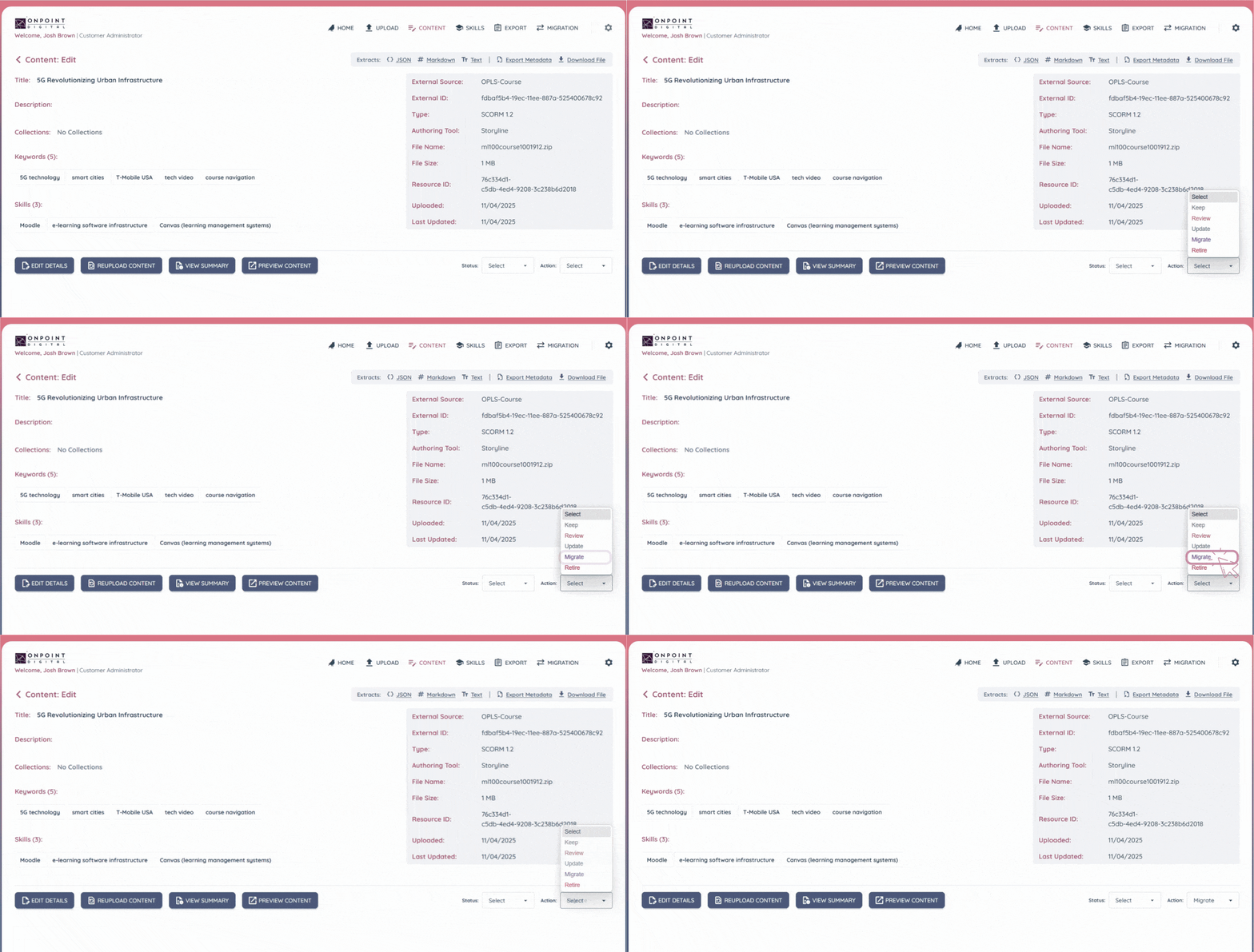
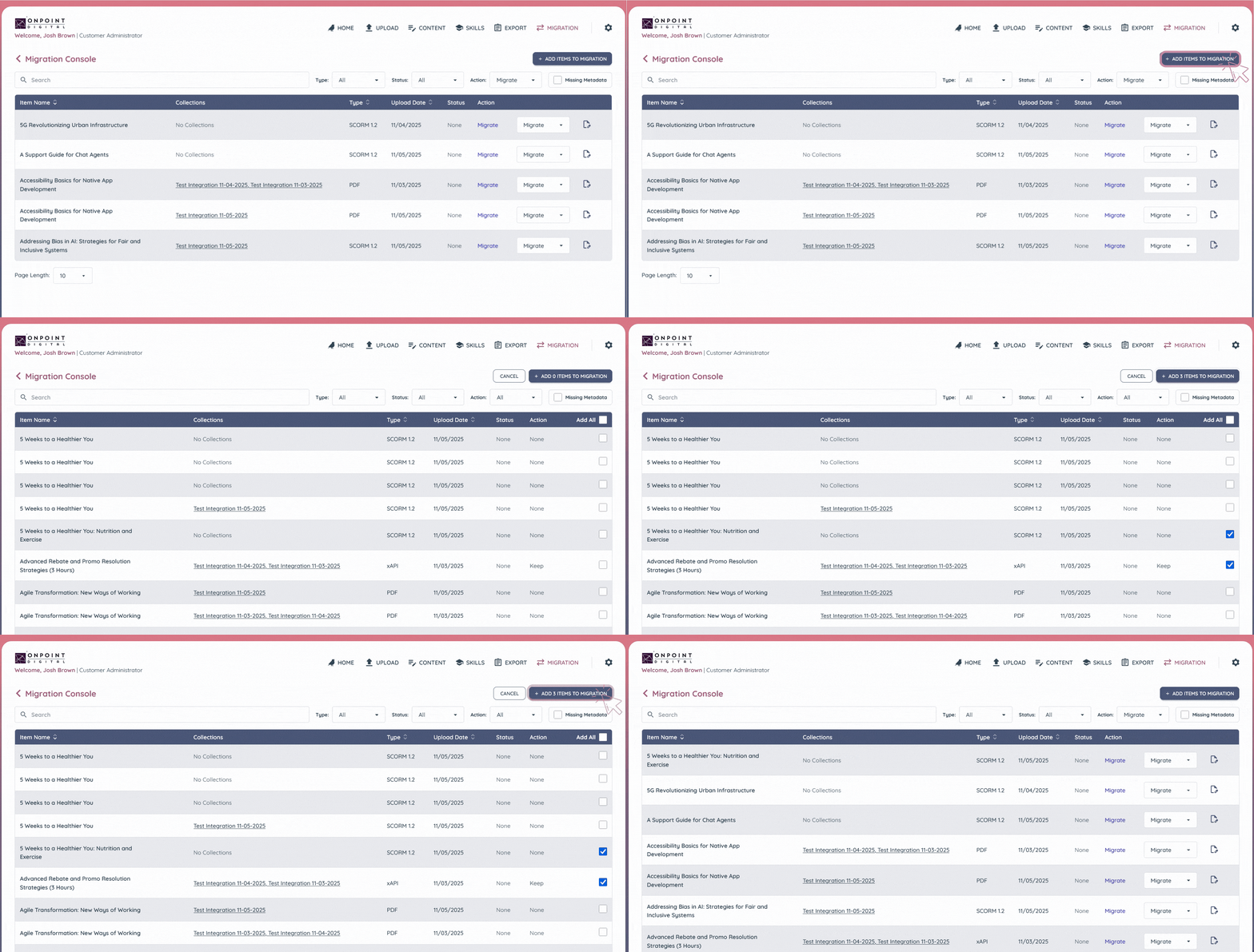
With MetaLark, since each content item is automatically scraped to capture and catalog its elements using MetaLark’s vector database, once all the content is in, searching and analysis can be performed across the entirety of the collections simultaneously. The resulting “Content Encyclopedia” can be used for one-time analysis or on an ongoing basis to help monitor catalog completeness and readiness for future efforts, and items can be tagged for retain, refresh or retire actions.
Content Analysts – Learning professionals tasked with understanding and assessing a content library for completeness, readiness and company alignment.
Learning Consultants– Individuals tasked with assessing and transforming a customer’s existing content to make sure it aligns with future training programs and new initiatives including report creation and planning.
Technical Consultants & Systems Engineers – Technical experts tasked with automating the process of assessing all the available content in legacy systems and crafting secure, automated methods for managing content imports and exports to/from all of the existing platforms.
Systems Integrator Business Executives – Leaders responsible for ensuring projects remain on schedule and on budget.
Ingest– Capture content via batch upload or seamless streaming via available APIs.
Organize – Categorize processed items into admin-defined Collections for improved analysis, reporting and flagging for completeness and retention.
Review – Preview content outside the multiple LMS platforms and Cloud Drives in its original format without logging into the source repositories.
Analyze – Use reports for improved analysis across your collected library.
Transform – Convert legacy content into new content packages – even in other 3rd party authoring tools – and leverage the value of that content in new ways through other tools and enterprise LLMs.
Export – Stage and migrate legacy content from MetaLark to the new target LMS platform using secure API methods.
Transition Content to a new Learning Platform. A learning-centric Systems Integrator is tasked with assisting a large enterprise customer with multiple legacy LMS platforms in transitioning onto a third more versatile LMS that will serve the enterprise moving forward. Besides the enormous challenge of identifying and assessing the broad array of existing content housed in the various existing platforms, is the challenge of “moving” the content items onto the new LMS platform, and potentially even from one authoring tool to another. With MetaLark, JSON-based content templates can serve as the foundation for repurposing and migrating existing legacy content into new contexts such as converting a SCORM or xAPI course created using authoring tool A into a new course editable in authoring tool B. Finally, teams can refactor text-based summaries of content extracted from their legacy library into a format that’s easily migrated to/importable into corporate Large Language Models or provisioned for Agentic AI access if desired. MetaLark’s Parsing Engine is able to analyze more than 15,000 content items over a week, then automatically update missing details to help create a full inventory complete with accurate metadata. Content tagged for future use can later be automatically pushed into the new go-forward LMS platform, saving substantial time and effort for the integrator’s team.